The black eye of every major sport is the risk of injury. In spite of all the advances in sports safety and sports medicine in the last quarter century, injuries still plague every major sports league. Football, with its $900 million dollar concussion problem, is in the most tenuous position, but Steph Curry’s sprained knee and Chris Paul’s broken hand in the last week remind us that basketball isn’t immune to impact injuries, either.
In 2015, the following players missed time due to major injuries:
- Kyrie Irving (ankle)
- Kevin Love (shoulder)
- Carmelo Anthony (knee)
- Jabari Parker (ACL)
- Anthony Davis (shoulder)
- Yu Darvish (elbow)
- Stephen Strasburg (elbow)
- Carlos Martinez (shoulder)
- Adam Wainwright (Achilles)
- Jose Fernandez (elbow)
- Tony Romo (collarbone)
- Terrell Suggs (Achilles)
- Jordy Nelson (ACL)
- Peyton Manning (old age)
Bodies are fragile and even the best athletes in the world fall victim to the normal wear and tear of playing a sport professionally. Sports injuries happen. That’s a fact of life. But when does a specific injury rise above the fray and demand greater attention from fans and sports executives? When it becomes an epidemic.
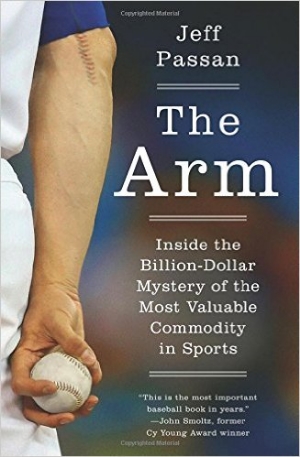
The Arm: Inside the Billion Dollar Mystery of the Most Valuable Commodity in Sports (Amazon, B&N) by Yahoo baseball columnist Jeff Passan, makes the case that elbow injuries in baseball are indeed an epidemic.
Influx of elbow injuries
Pitchers are throwing faster and starting younger than ever before. Not surprisingly, this increased velocity and specialization at an early age have caused an increase in the number of elbow injuries for pitchers. Consequently, more and more pitchers are choosing to undergo an operation called Tommy John surgery. Named after the first pitcher to undergo the operation in 1974, Tommy John surgery replaces the ligament (Ulnar Collateral Ligament) that connects the humerus with the ulna. Just how prevalent has the surgery become? According to Passan, nearly one-fourth of pitchers on major league rosters have undergone Tommy John surgery. And if that isn't staggering enough, Passan cites work from orthopedic surgeon Brandon Erickson indicating that over 55% of Tommy John surgeries from 2010-2015 were conducted on teenagers.
Too good to be true
Passan makes the interesting argument that the advent of Tommy John surgery was one of the best and worst things for baseball. Viewed from a short-term, myopic perspective, Tommy John surgery is a medical miracle that gives pitchers a second chance. Tearing apart your elbow is no longer a career-ending injury, but rather just another challenge to overcome. Viewed from a long-term, big-picture perspective, Tommy John surgery allows players, coaches, and MLB officials to ignore a serious problem. Passan writes, “It lulled baseball into a false sense of security, and by the time the sport realized what had happened, an epidemic was on its hands.” Instead of spending resources and time figuring out how to fix the root problem (elbow ligaments consistently snapping), baseball all too easily moved on. Former Red Sox general manager Ben Cherington tells Passan: “We thought elbows were solved, so we stopped thinking about them.”
Ignorance isn’t bliss
In the most data-driven sport in America, a great irony exists in baseball’s response to arm injuries. With streams of numbers and projections guiding the decisions of nearly every front office, one would expect a thoughtful, rationale response to the increase in torn UCLs. Instead, teams are throwing everything against the wall in the hopes that something will stick. In 2012, the Blue Jays limited their best pitching prospects to three innings per start, a strategy general manager Alex Anthopoulos admitted was just a guess at best (“We have no evidence that shows it’s the right way to go”). After drafting Dylan Bundy fourth overall in the 2011 draft, the Orioles drastically altered his workload (nine days between starts and 40-pitch limit per outing), only to lose Bundy to Tommy John surgery in 2013. Even Theo Epstein, the brilliant architect of the Cubs’ rebuild, admits his ignorance: “…if you’re brutally honest with yourself, you recognize that you don’t know. There’s so much more that we don’t know than we do know… And whether you do know it or not, you’re one phone call away.”
A way forward
So where do we go from here? What, if anything, can be done to prevent baseball pitchers from going under the knife? In the midst of much uncertainty and ignorance, the one clear answer seems to be relatively simple: don’t throw a ton of pitches before your arm is fully developed. In a decade-long study by the American Sports Medicine Institute (ASMI), kids who pitched more than one hundred innings in a calendar year were three and a half times likelier to get injured than those who didn’t. This makes sense as doctors believe almost every UCL tear is due to accumulation; that is, in most cases the UCL doesn’t break because of a single pitch but because of several thousand pitches. But beyond limiting use, the solutions appear muddied. Although not as serious as football’s CTE crisis, baseball will need to find answers as more fans and parents begin asking the two questions that drove Passan to write the book: How did baseball fail the pitching arm, and what can be done to save it?

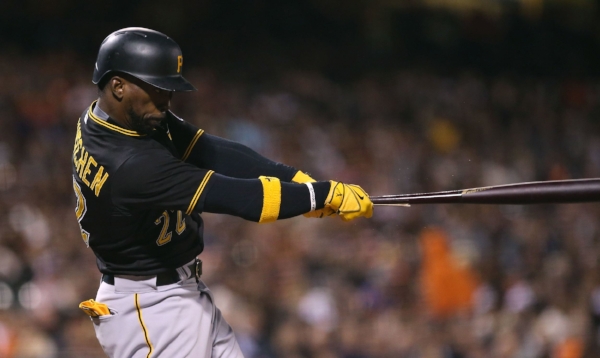


Listen to much of the recent conversation around the playoffs and you'll find yourself slipping into a mindset that assumes October success is completely random. A total crapshoot. However, when we think about player performance, is there really much of a difference between playing a regular season game on October 2 and a postseason game four days later on October 6? Well, at the risk of sounding too simplistic, I believe the best predictor of an individual's postseason performance is... wait for it... his recent performance. In other words, if a player is hitting well in September chances are he'll hit pretty well in October.